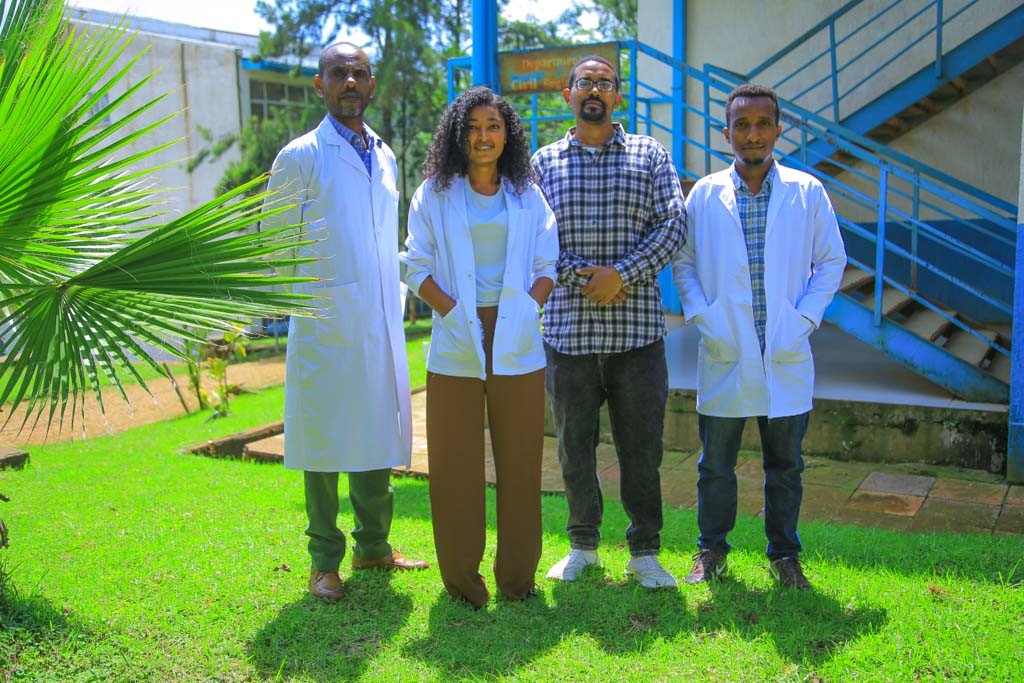
Department of Civil Engineering
Infrastructure forms the foundation of modern society by providing essential services and facilities, including safe drinking water, housing, roads, railways, airports, hospitals, schools, and other public utilities. Civil engineering is a fundamental engineering discipline concerned with the planning, analysis, design, construction, operation, and maintenance of infrastructure systems. The profession encompasses a wide range of projects, including buildings, bridges, highways, tunnels, airports, dams, water supply networks, and wastewater treatment facilities.
In developing countries such as Ethiopia, civil engineering plays a vital role in promoting sustainable economic growth, improving public infrastructure, and enhancing the quality of life. Well-planned and properly maintained infrastructure facilitates transportation, improves access to essential services, supports industrial development, and attracts domestic and foreign investment. Civil engineering therefore contributes significantly to national development by addressing infrastructure challenges, promoting environmental sustainability, and supporting the country’s long-term socioeconomic transformation.
The Department of Civil Engineering was established 2007 G.C under the Faculty of Technology at Wollega University, in response to Ethiopia’s rapidly growing demand for infrastructure development and professional engineers capable of implementing practical and sustainable solutions. From its inception, the department has focused on practice-driven education and community-oriented innovation.
Program Description
The current Civil Engineering Department of Wollega University emerged as a Civil Department when the College was established in 2007. Since then, the department had gone through a series of curricular changes and the program continued until the commencement of the Civil Engineering degree program. Within the past 9 years, the department consistently supplied the market with some of the best technicians and technical teachers who are now engaged in various businesses, industrial, educational, and research sectors in the nation.
Objectives & Outcomes of the Program
Objectives
- PEO-1: Majority of the graduates will become professional Civil Engineers.
- PEO-2: Some of the Civil Engineering graduates will exercise managerial positions in industries, government, and non-government organizations to achieve their career goals.
- PEO-3: Some of the graduates will become successful entrepreneurs in Civil Engineering sectors.
- PEO-4: Some of the graduates will become researchers and academicians in the field of Civil engineering.
Program Outcomes
- PLO-1: An ability to apply knowledge of mathematics, natural science, computing and engineering fundamentals, and Civil engineering specialization to solve complex engineering problems.
- PLO-2: An ability to identify, formulate, and solve complex engineering problems by applying principles of engineering, science, and mathematics.
- PLO-3: An ability to apply engineering design to produce solutions that meet specified needs with consideration of public health, safety, and welfare, as well as global, cultural, social, environmental, and economic factors.
- PLO-4: An ability to develop and conduct appropriate experimentation, analyze and interpret data, and use engineering judgment to draw conclusions.
- PLO-5: An ability to create, select and apply, and recognize limitations of appropriate techniques, resources, and modern engineering and IT tools, including prediction and modeling, to complex engineering problems.
- PLO-6: An ability to analyze and evaluate the impacts of sustainable development when solving complex engineering problems and design, considering society, the economy, environmental sustainability, health and safety, legal frameworks, and the environment.
- PLO-7: An ability to recognize ethical and professional responsibilities in engineering situations and make informed judgments, which must consider the impact of engineering solutions in global, economic, environmental, and societal contexts.
- PLO-8: An ability to function effectively on a team whose members together provide leadership, create a collaborative environment, establish goals, plan tasks, and meet objectives.
- PLO-9: An ability to communicate effectively with a range of audiences.
- PLO-10: An ability to apply knowledge and understanding of engineering management principles and economic decision-making and apply these to one’s own work, as a member and leader in a team, and to manage projects and in multidisciplinary environments.
- PLO-11: An ability to acquire and apply new knowledge as needed, using appropriate learning strategies.
Programs Detail
Head of Department

Adamu Mulatu
Civil Engineering Department Head
Institutional Email: adamum@wollegauniversity.edu.et
Phone Number: +251917 62 9085
Staff